
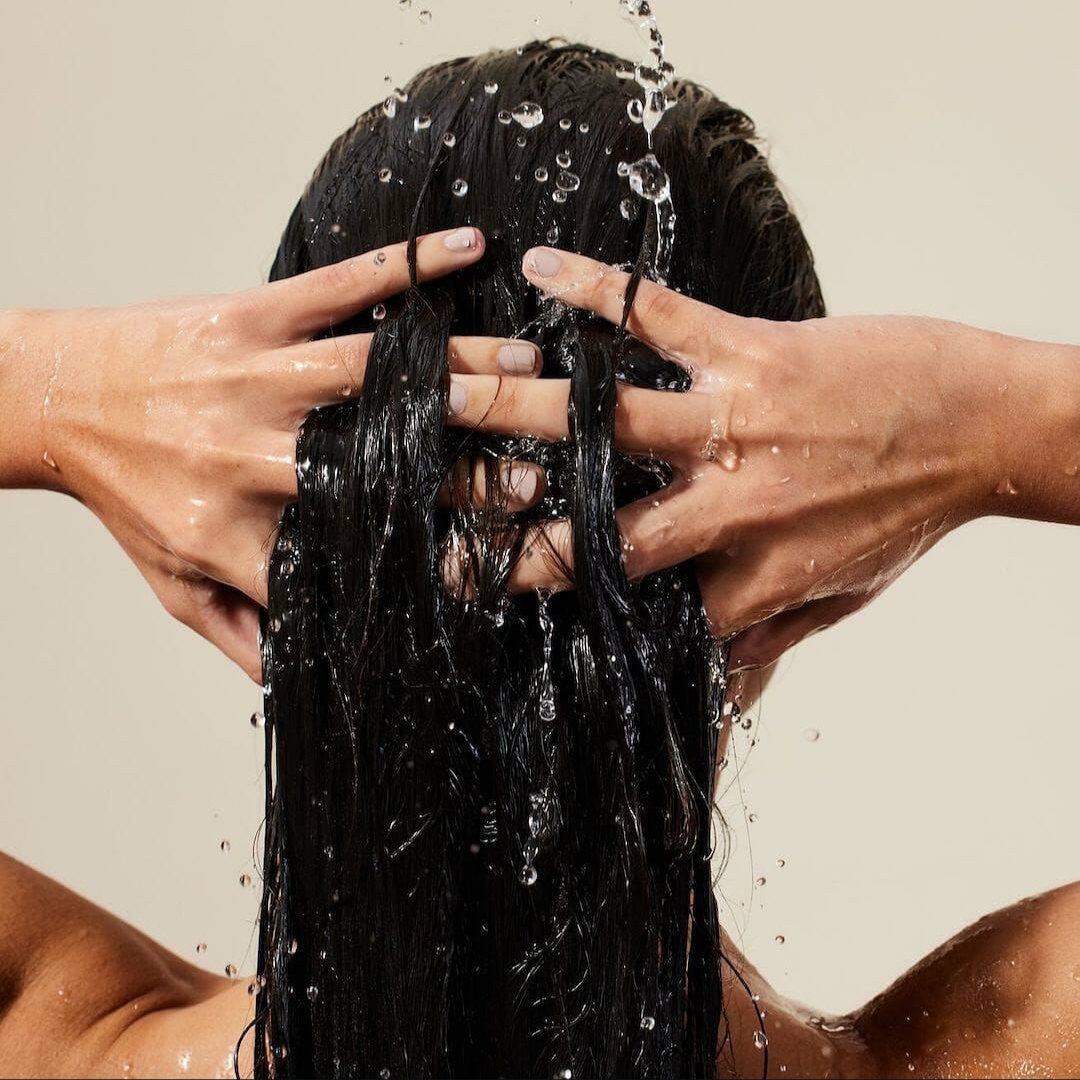
Why Shampoo Doesn't Lather in Hard Water (and How Much More You Use)
Share
Last updated: 8 October 2026
Quick Answer: Is your shampoo not lathering hard water's fault? Usually, yes. Calcium and magnesium bind part of the shampoo's cleansing agents into an insoluble scum, leaving less free to make foam, so you pour more. A two-bottle test at home shows whether water is the cause, and doubling your dose doubles what you spend on shampoo each month.
Thin, short-lived lather is often the first sign of hard water on hair, before dullness or tangles. The usual response, more shampoo, adds to the residue and the bill without fixing the cause.
This guide explains the chemistry, gives you a two-bottle test and a dose check, prices the extra shampoo in rupees and compares the fixes, including the times when the water is not to blame.
Why doesn't shampoo lather in hard water?
Hard water carries dissolved calcium and magnesium, and both react with cleansing agents. Each calcium or magnesium ion carries two positive charges, so it pairs with two soap molecules and drops out as an insoluble salt, the grey scum you see on bathroom tiles. Every molecule tied up that way is one fewer making foam or lifting oil.
Soap suffers most. A review of hair cosmetics explains that soap leaves an alkaline residue that settles in the hair as calcium salts, leaving it dull and tangled, and that modern sulfate cleansers, both alkyl sulfates and alkyl ether sulfates, avoid that effect. That is one reason shampoos are built on them rather than on soap.
Modern shampoos are not immune, though. In a 2018 study of 80 people, skin washed with sodium lauryl sulfate in hard water kept significantly more of the cleanser than skin washed in softened water, and the residue raised irritation. Shampoo makers add sequestering agents such as EDTA to bind calcium and magnesium, as a dermatology review of shampoos notes.
Lather is also a poor measure of cleaning. The same review says foam has little to do with how well a shampoo cleans; it mainly helps spread the product. Poor lather is still a useful signal, because it tells you something is tying up your shampoo.
What are the signs of hard water on hair?
Poor lather rarely comes alone. If three or more of these sound familiar, the water is a likely suspect.
- Shampoo lathers thinly unless you use a lot of it.
- Hair feels coated, waxy or squeaky straight after rinsing.
- Fine white flakes or a powdery residue appear soon after washing.
- Tangles and dullness, worst at the ends.
- White, chalky scale on the taps and shower head.
How much more shampoo does hard water make you use?
How much more depends on your water, your hair and your shampoo, so a single percentage would mislead. Measure your own instead: note how much shampoo a full lather takes with tap water, then with RO or packaged water, and price the difference with the table below.
The dose check. For one week, count the pumps or measure the shampoo in a teaspoon (about 5 ml) each time you wash. Then do one wash, or one two-bottle test, with RO or packaged water and see how much less you need.
The EU Scientific Committee on Consumer Safety uses about 10 g of shampoo per use as the typical amount, roughly 10 ml. Mid-priced 200 to 400 ml bottles on Indian brand stores work out at about ₹1.40 to ₹2 per ml (checked 8 October 2026).
| Shampoo per wash | A month at 3 washes a week | Cost a month | A month washing daily | Cost a month |
|---|---|---|---|---|
| 10 ml, the typical amount | 130 ml | ₹180 to ₹260 | 300 ml | ₹420 to ₹600 |
| 15 ml, one and a half times | 195 ml | ₹270 to ₹390 | 450 ml | ₹630 to ₹900 |
| 20 ml, double | 260 ml | ₹360 to ₹520 | 600 ml | ₹840 to ₹1,200 |
| 30 ml, triple | 390 ml | ₹550 to ₹780 | 900 ml | ₹1,260 to ₹1,800 |
Whatever multiple your dose check shows, your shampoo bill follows it. A daily washer who doubles the dose spends ₹420 to ₹600 more each month than at the typical amount.
How do you run the two-bottle lather test?
Use two identical clear bottles, the same shampoo and the same shake, so the water is the one thing that differs. It takes about a minute, needs no kit and tells you whether water is the main reason your shampoo struggles.
- Fill one clean, clear bottle halfway with bathroom tap water, and a second, identical bottle to the same level with RO or packaged drinking water.
- Add the same 3 to 4 drops of your usual shampoo to each.
- Cap both and shake hard for 10 seconds.
- Wait 30 seconds, then hold a ruler against each bottle and note the foam height in centimetres.
- Look again after a minute: note which foam collapses first and whether the tap bottle has turned cloudy.
| What you see | What it suggests | Next step |
|---|---|---|
| Similar foam height in both bottles | Water is not the main problem | Check oil, product and formula, below |
| Tap foam clearly lower, water slightly cloudy | Hard water is tying up your shampoo | Confirm with hardness strips or a lab test |
| Tap foam low and gone within a minute, with a scummy ring | Very hard water is likely | Get a hardness figure and plan a fix |
The test ranks your water against a softer sample; it does not give a hardness figure in mg/L. For that, use the strips and lab options in our guide to checking water hardness at home.
How hard is the water in Indian cities?
Hardness depends more on the source than on the city. Piped supply can be soft, while borewell and tanker water in the same city can sit far above the Bureau of Indian Standards (BIS) limits of 200 mg/L acceptable and 600 mg/L permissible. Treat this table as a pattern and test your own tap.
| Supply | What published data shows | Against BIS 200 and 600 mg/L |
|---|---|---|
| Mumbai, piped | All 10 piped samples met all 44 parameters tested in a 2019 BIS tap-water study | Within the limits tested |
| Bengaluru, borewell | Groundwater total hardness of 100 to 600 ppm, per the Central Ground Water Board (CGWB) | From under 200 up to the 600 limit |
| Chennai, piped | All 10 samples failed at least one parameter, 2 of them on total hardness (2019 BIS study) | 2 of 10 failed on hardness in that test |
| Delhi, groundwater | 50 South West Delhi wells ranged from 120 to 4,310 mg/L, averaging about 1,060 mg/L (2018 study) | Most samples above 200; the highest over seven times 600 |
| Hyderabad, piped | One of 10 samples failed one parameter, phenolic compounds (2019 BIS study) | Within the hardness limit in that test |
| Pune, groundwater | Of 24 CGWB monitoring wells in 2011, 16 were under 300 mg/L, 7 between 300 and 600, and 1 above 600 | Most within 600; a third above 300 |
These studies cover different years, areas and sources, so they are not a ranking.
Regular, clarifying or chelating shampoo, which works in hard water?
A chelating shampoo is the one built for hard water: its chelating agent binds calcium and magnesium so they rinse away. A clarifying shampoo strips oil and product with strong cleansers, and a regular shampoo handles everyday dirt. Most people on hard water need a regular shampoo most days and a chelating one once a week.
| Feature | Regular shampoo | Clarifying shampoo | Chelating shampoo |
|---|---|---|---|
| Main job | Everyday oil, sweat and dirt | Oil, silicones and styling product | Calcium and magnesium film and scum |
| Label words to look for | Mild cleansers | "Clarifying" on the front; strong sulfate cleansers such as sodium lauryl sulfate | Disodium or tetrasodium EDTA, sodium phytate, sodium gluconate, citric acid |
| Lifts mineral film? | No | Not reliably | Yes |
| How often | As your scalp needs | About once every 10 washes | No more than once a week; once a fortnight for coloured or curly hair |
| Afterwards | Conditioner | Conditioner or a mask | Conditioner or a mask |
Never use a chelating or clarifying shampoo daily; both strip more than an everyday shampoo. Our guide to hard water buildup on the scalp shows how to remove the film step by step.
Which fix works, and what does each cost?
Clearing the film and changing the water are different jobs. A weekly chelating shampoo removes the film for about ₹130 to ₹210 a month but does not stop it returning, and a shower filter reduces hardness for about ₹115 to ₹300 a month in cartridges after purchase; more shampoo does neither. Our comparison of hard water hair treatments covers salon and home options in more detail.
| Fix | What you pay | What it does | What it does not do |
|---|---|---|---|
| More shampoo | See the dose table above | Eventually gets a lather | Does not stop scum forming; leaves more residue |
| Chelating shampoo, weekly | ₹585 to ₹945 for 200 to 300 ml, about ₹130 to ₹210 a month | Removes minerals bound to the hair | Does not prevent the next film |
| Shower filter | ₹1,499 (municipal) or ₹1,899 (borewell, tanker), then ₹699 or ₹899 cartridges, about ₹115 to ₹300 a month. Replace when the cartridge is fully brown, or at 3 to 6 months depending on your water, whichever comes first. | Reduces hardness, chlorine and sediment at the outlet | Does not strip existing film; does not lower TDS |
| Whole-home ion-exchange softener | Plumbing work plus salt and servicing; get a written quote | Removes hardness across the home | Does not remove existing film |
| Salon chelating (detox) treatment | From about ₹1,800 to ₹2,000 a session (Mumbai listings) | Removes the film, for now | Does not change the water |
Prices were checked on 8 October 2026 on brand stores and salon booking listings.
Care Dale's dermatologist-certified, clinically tested tap-shower filter for municipal water (₹1,499) reduces hardness (calcium and magnesium), chlorine and sediment at the point of use; homes on borewell or tanker water need the ₹1,899 version. Pair it with one chelating wash to clear the old film, since the filter reduces new deposits rather than stripping old ones.
The Care Dale filter is not a purification system, so it does not reduce total dissolved solids (TDS), nor does it remove iron or heavy metals. No shower filter, Care Dale included, addresses iron, heavy metals, chloramine, TDS or bacteria.
What else stops shampoo lathering?
If the two-bottle test shows equal foam, look elsewhere. Oil, product buildup, a low-foam formula and damaged hair can all mimic hard water, and each has a quick check that takes about two minutes on wash day.
| Cause | Two-minute check | When it should clear |
|---|---|---|
| Oily scalp or pre-wash oiling | Shampoo twice: if the second lather is full, oil was holding the first one down | At the second shampoo of the same wash |
| Silicone or styling-product buildup | Roots feel waxy and a comb leaves a greasy smear | After one clarifying wash |
| A low-foam or sulphate-free formula | Run the two-bottle test with your old shampoo as well; if it foams more in the same water, it is the formula | Nothing to fix, since foam is not cleaning |
| High porosity or damaged hair | Lather is fine, but hair feels rough, dry or waxy once dry | Over weeks, with conditioning and trims; see our hair porosity guide |
Oil holding foam down is why a second shampoo lathers more, according to the same dermatology review. If lather is normal and hair still feels waxy after two or three weeks of these checks, look at your conditioner and styling products before the water.
Which shampoo works best in hard water?
There is no single best hard water shampoo in India; there is a right label for each job. For everyday use, pick a mild shampoo with a pH of 5.5 or lower; for the weekly reset, pick one that names a chelating agent; and use a conditioner every time.
- Weekly chelating shampoo. Look for disodium or tetrasodium EDTA, sodium phytate, sodium gluconate or citric acid. EDTA also appears in small amounts in many ordinary shampoos to keep the formula stable, so its presence alone does not make a hard-water shampoo.
- Everyday shampoo. A mild cleanser with a stated pH of 5.5 or lower, which the dermatology review gives as the scalp's own pH.
- Conditioner. After every shampoo, as the American Academy of Dermatology advises.
How you wash matters as much as the bottle. Our guide on how to wash hair in hard water, step by step covers the chelating day, oiling and the final rinse.
Frequently asked questions
Why is my shampoo not lathering all of a sudden? A sudden change often means your water changed: a move, or a switch from piped supply to a tanker or borewell. If the water is the same, look at what else is new, such as a sulphate-free shampoo, a styling product or heavier oiling.
Why does my hair feel waxy after washing? Usually a residue is sitting on the cuticle: in hard water, scum made of minerals bound to cleanser; otherwise conditioner, silicone or oil. One chelating wash tells them apart. If the waxy feel goes, it was minerals; if it stays, cut back on products.
Does using more shampoo help in hard water? Not much. Extra shampoo eventually foams, but the minerals still bind part of it, and in the 2018 study skin washed in hard water kept significantly more cleanser. A second, smaller lather after rinsing usually foams better than one big dose.
Is there a best shampoo for hard water hair fall? No shampoo changes hair fall that starts at the root, which has causes such as thyroid problems, low iron, hormones or genetics. A chelating shampoo can reduce breakage from a rough, coated shaft. If you shed more than the normal range for weeks, see a dermatologist.
Does boiling water make shampoo lather better? Partly, but not practically. Boiling removes temporary hardness, the calcium and magnesium bicarbonates that drop out as scale, but not permanent hardness from sulphates and chlorides. Boiling enough water for a hair wash is also slow and uses a lot of fuel.
Will a shower filter make my shampoo lather again? It should help, because it reduces the hardness that ties up shampoo, along with chlorine and sediment. Clear the old film with one chelating wash first. It is not a purifier, so it does not lower TDS or remove iron, heavy metals, chloramine or bacteria.
Written by
Roshni
Co-Founder, Care Dale · IIT Kharagpur · Water Filtration Engineer
Roshni co-founded Care Dale after experiencing hard water hair loss firsthand in Bangalore. An IIT Kharagpur engineer, she built and tested 50 prototypes before developing CareTec™ — India's first and only clinically tested shower filter technology, now used in over 50,000 homes.
View on LinkedIn